If your workweek no longer means five days in the office, your home base matters more than ever. You want enough space to work comfortably, a realistic way to get into the city when needed, and day-to-day convenience that supports your routine instead of fighting it. Wilton, CT stands out for exactly that mix, and it does so in a practical, grounded way. Let’s dive in.
Wilton offers a real rail option
For many hybrid commuters, the first question is simple: can you actually get where you need to go without turning every office day into a major production? Wilton sits on Metro-North’s Danbury Branch, with service on the corridor that includes Grand Central along with stops such as South Norwalk, Merritt 7, Wilton, Cannondale, Branchville, Redding, and Bethel. That gives Wilton a built-in transit connection for Manhattan-bound commuters.
Just as important, the train is part of the town’s normal rhythm, not a fringe option. Wilton station is near the Route 7 and Route 33 junction by Wilton Center, which keeps it central for many residents. If your job only brings you into Midtown a few times a week, that kind of access can make the hybrid schedule much easier to manage.
Station parking adds convenience
Commuting only works when the details work too. According to regional commuter parking inventory, the Wilton station lot is a CTDOT-managed facility with 251 spaces, and there is no parking fee. That can make a meaningful difference if you are comparing towns where station parking is tighter, more complicated, or more expensive.
For a hybrid household, easy parking can remove one more layer of stress from office days. You are not just evaluating train access on paper. You are evaluating how smooth the full routine feels from your driveway to the platform.
The commute is useful, not perfect
A balanced look at Wilton matters. The town’s planning documents note that while rail access is a clear strength, Wilton is not a one-seat ride to every regional job center. Some Fairfield County and Westchester connections may require transfers, and White Plains does not have direct rail service from Wilton.
That means Wilton tends to work best for buyers who want credible access to New York City and nearby employment centers, but who do not expect every commute to be direct or effortless. In other words, it fits the hybrid lifestyle especially well because you are not relying on daily urban-style transit convenience for every trip.
Route 7 still matters
Even in a train-served town, roads remain part of the equation. Route 7 is a core commuter corridor for Wilton, and CTDOT is actively developing plans for Route 7 improvements in Norwalk and Wilton aimed at reducing congestion and crashes while adding sidewalks, bicycle facilities, and transit improvements.
That tells you two things. First, car travel is still central to how many people move around the area. Second, transportation planning continues to focus on making that corridor function better over time.
Wilton homes fit remote work well
Remote work is not just about internet speed. It is also about whether your home can support your day without forcing you to work at the kitchen counter every afternoon. Wilton’s housing pattern is especially relevant here.
Census QuickFacts reports an 87.8% owner-occupied housing rate, a median value of owner-occupied housing units of $891,300, and a mean travel time to work of 35.7 minutes. Those numbers point to a suburban market where homeownership is the norm, commuting is part of life, and buyers are often looking for longer-term functionality rather than short-term convenience alone.
Wilton’s land use pattern also supports that story. The town’s plan of conservation and development states that 85% of Wilton’s land area is in the R-2A zone, which permits single-family residences on lots of two acres or more. The zoning regulations also identify single-family detached dwellings as permitted uses in the town’s single-family districts.
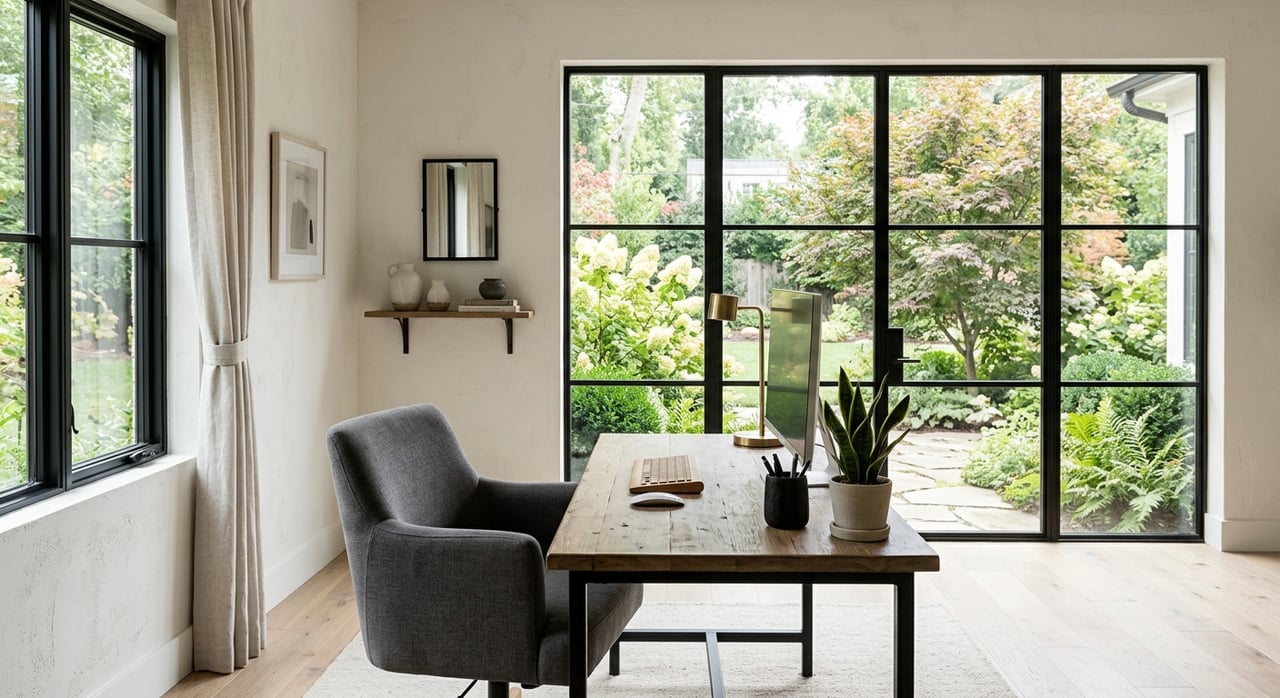
In practical terms, that means many buyers coming to Wilton are looking at homes with the kind of footprint that can better accommodate a dedicated office, a flex room, or a quieter work zone. If your work-from-home setup needs to coexist with family life, guests, or shared schedules, that extra breathing room can be a real advantage.
ADU rules add flexibility
Wilton’s zoning regulations also allow accessory dwelling units in single-family residences, subject to limits including owner occupancy and size restrictions of up to 750 square feet or one-fourth of the principal structure. For some buyers, that opens up useful possibilities.
You might think of an ADU as a separate office space, a guest suite, or part of a multi-generational living arrangement. It will not fit every property or every buyer’s goals, but it does add another layer of flexibility that is worth knowing about if you are planning for changing needs over time.
Broadband supports home-office life
A town can sound remote-work friendly in theory, but the day-to-day test is simple: can people actually work from home reliably? In Wilton, the household technology numbers are strong. Census data shows 97.9% computer ownership and 97.1% broadband subscription.
Those figures do not guarantee that every home setup is identical, but they do support the broader picture of Wilton as a place where remote work is already part of how people live. For video calls, cloud-based work, and connected households, that matters.
The local economy fits professionals
Wilton is not just a place where people sleep and leave. The town’s 2021 profile lists professional, scientific, and technical services along with finance and insurance among the top industries in town. It also reports 3,294 active businesses.
That backdrop helps explain why Wilton resonates with hybrid and remote workers. The town supports a professional workforce, and that often shows up in the types of housing needs, commuting habits, and local amenities buyers prioritize.
You can work outside the house
Even if you love working from home, most people need a change of scenery sometimes. One of Wilton’s strongest remote-work amenities is Wilton Library. It offers six study rooms for study groups, meetings, or individual use at no charge for one session per day of up to two hours.
That gives you a practical option when you need quiet space, a focused work block, or a place to step away from household distractions. The library also offers rentable rooms and an Innovation Station makerspace, which adds even more flexibility depending on your work style.
Library rooms support meetings too
The library’s room options are useful for more than solo work. The Rimer Room and Presidents’ Room can be configured for lecture, classroom, or conference use. For professionals who occasionally need small meeting space without heading into Norwalk or Stamford, that is a meaningful local resource.
This kind of amenity matters because hybrid life is rarely all-or-nothing. Some days you want your own office. Some days you need neutral ground for focus, calls, or collaboration.
Coworking is available in town
If you prefer a more formal office environment, Wilton also has a coworking option. Spaces/Regus operates at 15 River Road with coworking, office, and meeting-room options, along with day office choices and 24/7 access for certain memberships.
The location is tied to familiar local points like Wilton Town Hall and Wilton Shopping Center. For buyers comparing towns, this is the kind of detail that shows Wilton can support more than just the traditional home-office model.
Coffee shops round out the routine
Sometimes the best workspace is simply a short coffee break and a reset. Straightforward local options include Tusk & Cup Fine Coffee on Old Ridgefield Road and Nova Cafe on Danbury Road. These kinds of spots can support informal meetups, solo planning time, or a midday change of pace.
They may seem like small details, but they shape how livable a town feels during a workweek. Hybrid life works better when you have a few reliable places to plug into your routine.
Outdoor access helps balance the day
One reason Wilton works well for remote and hybrid commuters is that it balances work access with room to decompress. The town’s trails resources include town, state, federal, land-trust, and Norwalk River Valley Trail options. That gives you plenty of ways to step away from your screen without driving far.
If you work from home often, this matters more than people expect. A quick walk before meetings, during lunch, or at the end of the day can make a big difference in how sustainable your weekly routine feels.
What buyers should keep in mind
Wilton has clear strengths, but it is important to match those strengths to your priorities. The town’s planning documents note that Cannondale and Wilton stations have few, if any, amenities or retail immediately nearby. That means daily life still tends to be car-oriented even with train access.
There is also a practical traffic note to understand. The station inspection report describes the Route 7 and Route 33 junction as busy, with entering and exiting the station challenging at times because of traffic volumes. If you are hoping for a dense, walk-everywhere setup, Wilton may not feel like the right fit.
Why Wilton makes sense now
Wilton works for hybrid and remote commuters because it solves the modern workweek in a realistic way. You get a legitimate train option to Midtown, station parking that supports occasional office days, housing that often offers more room to work from home, strong household broadband adoption, and a few helpful places to work when home is not ideal.
Just as important, Wilton offers a quieter suburban base without cutting you off from the region. If your goal is to find a town where space, access, and routine can actually work together, Wilton deserves a close look.
If you are considering a move to Wilton or comparing it with other Fairfield County towns, Jaskaran Singh can help you evaluate homes, commute tradeoffs, and neighborhood fit with clear, local guidance.
FAQs
Is Wilton, CT good for hybrid commuters to Manhattan?
- Yes. Wilton is on Metro-North’s Danbury Branch, which includes service to Grand Central, making it a practical option for people who commute into Midtown a few times a week.
Does Wilton train station have parking?
- Yes. The Wilton station lot has 251 spaces and no parking fee, according to regional commuter parking inventory.
Are Wilton homes well suited for remote work?
- Often, yes. Wilton’s housing pattern includes a large share of single-family homes, and local zoning also allows accessory dwelling units under specific rules, which can add flexibility for office or guest space.
Can you work remotely from places in Wilton besides home?
- Yes. Wilton Library offers free study room access for limited sessions, and Spaces/Regus at 15 River Road provides coworking, office, and meeting-room options.
Is Wilton a walkable town for daily errands?
- Buyers should not expect a dense, walk-everywhere environment. Town planning documents note limited amenities around some station areas, and daily life in Wilton is still largely car-oriented.