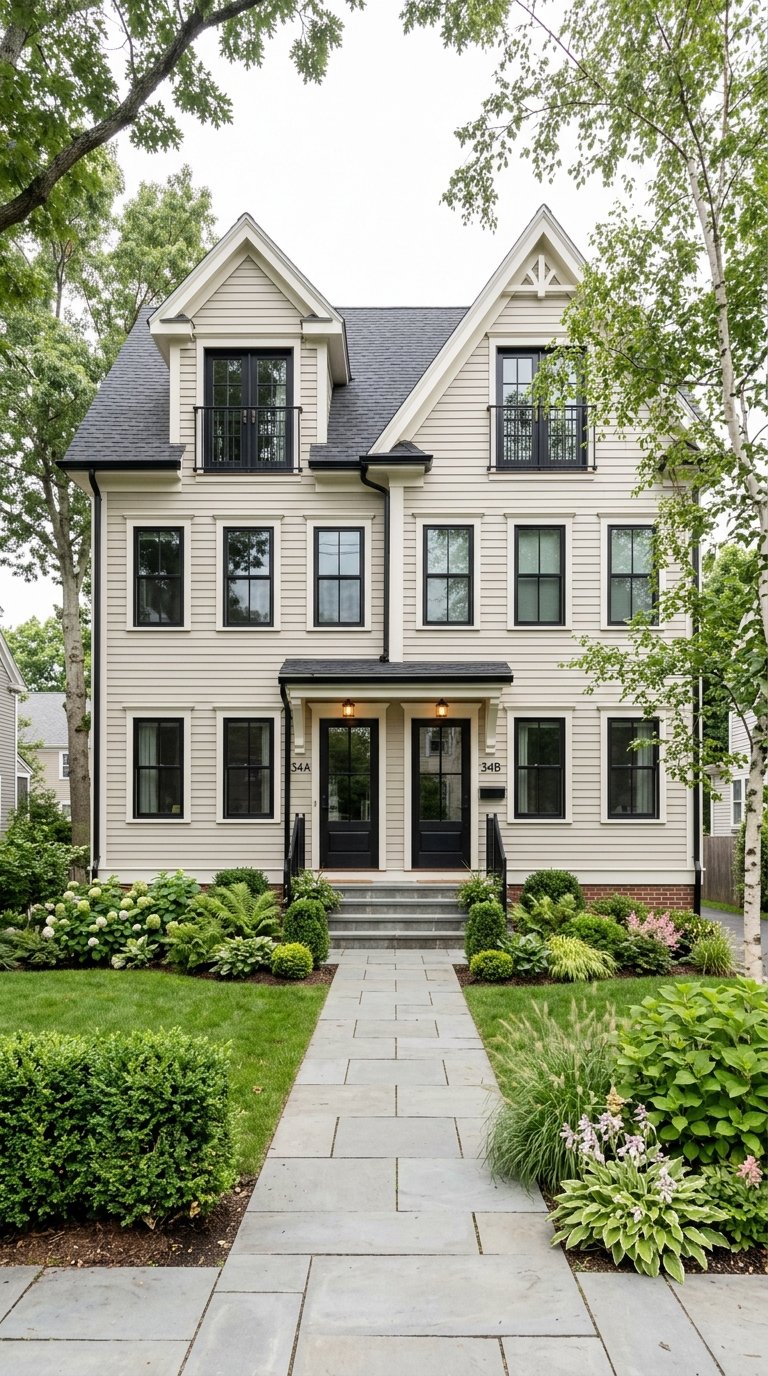
If you have been thinking about buying a duplex, triplex, or fourplex in Danbury, you are not alone. Small multi-family properties can look appealing because they offer rental income, a chance to spread vacancy risk across more than one unit, and potential upside if you buy well. But in Danbury, strong rents are only part of the story, and knowing the local rules matters just as much as finding the right listing. Let’s dive in.
Why Danbury gets investor attention
Danbury is a real rental market with both owner-occupied and renter households. According to the U.S. Census QuickFacts for Danbury, the city’s 2024 population estimate was 88,692, the median household income was $83,393, and median gross rent was $1,846.
That occupied-rent figure is useful, but it does not tell the full story of what new tenants may be seeing in today’s market. Current asking-rent sources show higher numbers, with Apartments.com reporting average apartment rent in Danbury at $2,339 per month, while other platforms in the research also place asking rents in the mid-$2,000s. The practical takeaway is simple: older leases may be lower, while current asking rents often sit higher.
Danbury also has a meaningful amount of multifamily housing. DataHaven’s local profile reports 34,628 housing units, with 44% in multifamily buildings, and notes that 52% of renter households are cost-burdened. For investors, that points to steady rental demand, but it also reminds you that affordability is tight, so rent strategy should be thoughtful and well documented.
What counts as small multi-family
For most first-time investors, small multi-family means a duplex, triplex, fourplex, or a very small apartment building. These properties are often easier to understand than larger complexes because you can review each unit, lease, utility setup, and repair issue in a more hands-on way.
Danbury does have active inventory in this category, although supply can be limited. Realtor.com’s Danbury multi-family search page currently shows 17 multi-family homes for sale and lists a citywide median listing price of $519,000 with median rent around $2.5K. Think of that as a snapshot of the market, not a fixed entry price for every property.
Why zoning comes first
One of the biggest beginner mistakes is assuming that because a building looks like a multi-family, it is automatically a straightforward investment. In Danbury, zoning can change what is permitted from one area to another.
Under the Danbury zoning regulations, RMF-4, RMF-6, and RMF-10 districts permit uses such as apartment houses, garden apartments, row houses, and two-family and three-family dwellings. The Three Family Residential District also allows two-family and three-family dwellings. By contrast, single-family districts permit only one-family dwellings.
That means a duplex or triplex may be allowed in one location and prohibited or treated as nonconforming in another. Before you get attached to projected rental income, confirm the zoning and current use status so your underwriting matches reality.
How to underwrite a deal simply
If you are just getting started, you do not need a complicated spreadsheet to understand the basics. You do need a conservative one.
Start with gross scheduled rent, which is the total rent if every unit is occupied and paying in full. Then subtract likely costs such as vacancy, repairs, management, insurance, utilities, reserves, and property taxes. What is left is your net operating income, often called NOI.
From there, you can compare deals using cap rate or cash-on-cash return. The exact formula matters less at the beginning than the habit of testing your numbers carefully. A property can look great at the listing stage and still disappoint if you underestimate turnover, maintenance, or compliance costs.
Danbury taxes can change the math
Property taxes are a major part of the Danbury investment picture. According to the Danbury Assessor, real estate is assessed at 70% of fair market value, and the current Grand List 2024 mill rate is 24.99.
That works out to an effective annual property-tax rate of about 1.75% of market value. On a $500,000 property, that is roughly $8,746 per year before exemptions. For a new investor, this is one of the clearest reasons to avoid overly optimistic projections.
Danbury can offer solid rent potential, but taxes are meaningful. If you combine strong headline rents with weak expense assumptions, the deal may look better on paper than it performs in real life.
Why older housing needs closer review
Small multi-family investing often means buying older buildings, and Danbury is no exception. DataHaven reports that 33% of households live in structures built before 1960.
Older properties can offer value-add opportunities, but they can also come with deferred maintenance. Roofs, foundations, boilers, HVAC systems, plumbing, electrical systems, and fire separation details all deserve careful review during due diligence.
Lead risk is also part of the conversation. The Connecticut Department of Public Health states that housing built before 1978 may contain lead paint, and sellers or lessors must disclose lead-based paint information for housing built before 1978. If you are buying an older property, make sure this issue is handled properly from the start.
Local compliance matters more than many buyers expect
In Danbury, rental property ownership comes with local processes you need to understand. The city’s Housing Program inspects rental units and issues a Certificate of Apartment Occupancy, or CAO, when a unit passes inspection.
A CAO is required when the occupancy or ownership of a 3-family or larger home changes, and certificates are valid between tenancies or for one year from issuance. For investors, that means you should review inspection and certificate history during due diligence, especially if you are buying a property with three or more units.
Danbury also has a Fair Rent Commission that investigates complaints about excessive rental charges from tenants. That does not mean you cannot adjust rents. It does mean your rent increases, lease terms, and tenant communication should be clear, documented, and compliant.
If you are planning renovations, timing matters too. The city’s Permit Center coordinates building, zoning, fire marshal, health, and utilities review through an online portal. If your project changes use, occupancy, or building systems, build enough time into your budget and schedule for permits and inspections.
A practical due diligence checklist
Before you move forward on a Danbury small multi-family property, review the basics carefully:
- Confirm zoning and permitted use
- Verify whether the current use is legal and conforming
- Review CAO and inspection history, especially for 3-family and larger properties
- Analyze the rent roll and compare it with actual lease terms
- Check security deposits, renewal dates, and who pays which utilities
- Review utility metering for each unit
- Confirm the current property-tax bill
- Inspect roof, foundation, plumbing, electrical, boiler or HVAC, and common areas
- Review for signs of deferred maintenance in older buildings
- Ask about lead disclosure for pre-1978 housing
- Budget for reserves, turnover, and vacancy
This list will not replace professional inspections or legal guidance, but it can help you avoid the most common early mistakes.
Best first steps for new investors
If you are buying your first small multi-family in Danbury, focus on clarity over speed. A good first deal is not always the one with the highest advertised rent. It is the one where the zoning checks out, the expenses are realistic, the property condition is understandable, and the numbers still make sense after conservative assumptions.
It also helps to define your strategy early. Are you looking for stable rental income, a light value-add project, or a property where you may eventually update units over time? Your answer will shape how you evaluate taxes, permits, age of the building, and expected repairs.
Danbury can be a strong market for small multi-family investing, but success usually comes from careful local research, not guesswork. If you want help evaluating a duplex, triplex, or small apartment property in Danbury or nearby Fairfield County markets, Jaskaran Singh can help you review opportunities with a practical, local perspective.
FAQs
What makes Danbury attractive for small multi-family investing?
- Danbury has a sizable multifamily housing stock, active rental demand, and current asking rents that often land in the mid-$2,000s, but you still need to underwrite conservatively because taxes and older-building costs can be significant.
What property types count as small multi-family in Danbury?
- Most buyers use the term to mean duplexes, triplexes, fourplexes, and small apartment buildings.
Why is zoning important for Danbury multi-family properties?
- Danbury zoning districts do not all allow the same housing types, so a property that appears to function as a duplex or triplex may need closer verification before you rely on its income potential.
How much are property taxes on an investment property in Danbury?
- Based on the city’s 70% assessment ratio and 24.99 mill rate, the effective annual tax rate is about 1.75% of market value, or roughly $8,746 on a $500,000 property before exemptions.
What inspections or certificates matter for Danbury rental properties?
- Danbury’s Housing Program issues a Certificate of Apartment Occupancy for qualifying rental units, and this is especially important when ownership or occupancy changes for 3-family or larger properties.
What should you check before buying an older Danbury multi-family building?
- You should review the building’s condition, utility setup, tax bill, leases, inspection history, and lead disclosure requirements, especially if the property was built before 1978.